
Flavor Guides
How to Flavor Coffee Beans (Complete Guide for 2026)
Mar
Learning how to flavor coffee beans properly can transform your product quality, consistency, and customer experience.
Whether you are a small batch roaster or a large-scale coffee business, understanding the right techniques, timing, and ratios is essential for achieving a premium result using coffee bean flavor oils.
What Is the Best Way to Flavor Coffee Beans?
The most effective method is simple and widely used across the industry:
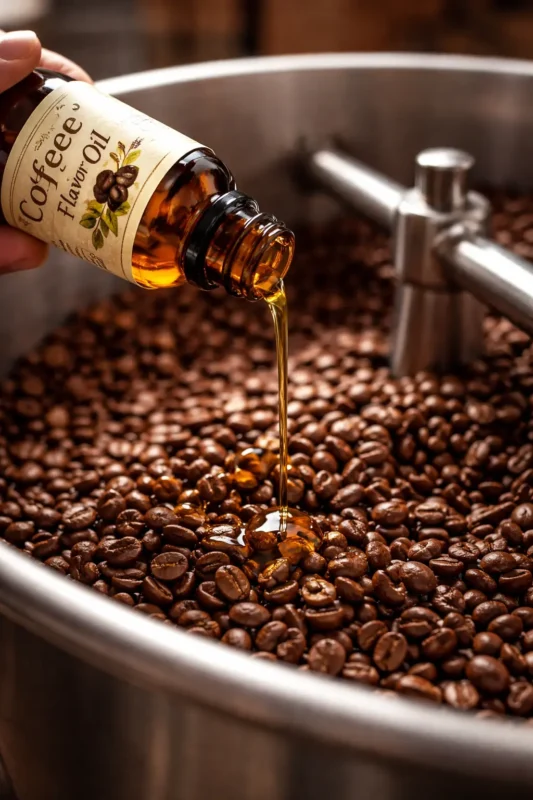
Apply coffee bean flavor oil to roasted coffee beans while they are still warm.
This allows the beans to absorb the flavor evenly, resulting in a more consistent and long-lasting profile.
How Much Flavor Oil Should You Use?
The correct ratio depends on your desired intensity and roast level.
- Standard usage: 10ml per pound of roasted coffee beans
- Light flavor: 5ml per pound (common for retail blends)
- Strong flavor: up to 15ml per pound (especially for dark roasts)
Pro Tip: Darker roasts may require more flavor oil because the roast profile can reduce flavor clarity.
When Should You Add Flavor to Coffee Beans?
Timing is critical when flavoring coffee beans.
The ideal moment is:
- After roasting is complete
- When beans are still warm (around 100–120°F)
- Not when beans are extremely hot
Adding flavor too early can cause evaporation and loss of aroma, while adding it too late (cold beans) reduces absorption efficiency.
Can You Flavor Cold Coffee Beans?
Yes, but it is not recommended.
Cold beans do not absorb flavor oils as effectively, which often leads to:
- Uneven coating
- Reduced flavor strength
- Higher usage of flavor oil (sometimes double)
For best results, always flavor beans while they are warm.
How to Apply Coffee Bean Flavor Oils
There are several common methods used in the industry:
- Hand tossing in a mixing container
- Using a rotating drum or mixer
- Large-scale blending systems (even cement mixers in high-volume operations)
The goal is simple: achieve even distribution across all beans.
Flavor Absorption and Performance
Not all flavor compounds behave the same when applied to coffee beans.
Through industry testing, certain compounds—like vanilla-based notes—are known to:
- Penetrate coffee beans more effectively
- Provide longer-lasting flavor retention
- Enhance overall flavor structure
This is why many professional coffee bean flavor oils are carefully formulated for performance, not just taste.
Important Tips for Best Results
- Do not flavor beans while they are extremely hot
- Allow CO2 to release naturally after roasting
- Use proper mixing equipment for even coverage
- Store flavored beans in ventilated, sealed bags
- Avoid plastic containers that may absorb flavor
Common Mistakes to Avoid
- Over-flavoring (above 4–5%) leading to bitterness
- Uneven mixing resulting in inconsistent taste
- Using low-quality flavor oils that fade quickly
Most commercial operations work within a 1%–3% flavoring range for optimal balance.
Why Coffee Bean Flavor Oils Matter
Using high-quality coffee bean flavor oils ensures:
- Consistent flavor delivery
- Heat stability during application
- Long-lasting aroma and taste
- Professional-grade product quality
Final Thoughts
Mastering how to flavor coffee beans is a combination of timing, technique, and quality ingredients.
By applying flavor oils correctly, you can create a product that stands out in both taste and performance—whether for retail, wholesale, or specialty coffee markets.
