


Coffee Bean Flavor Oil Technical & Application Guide for Flavored Coffee
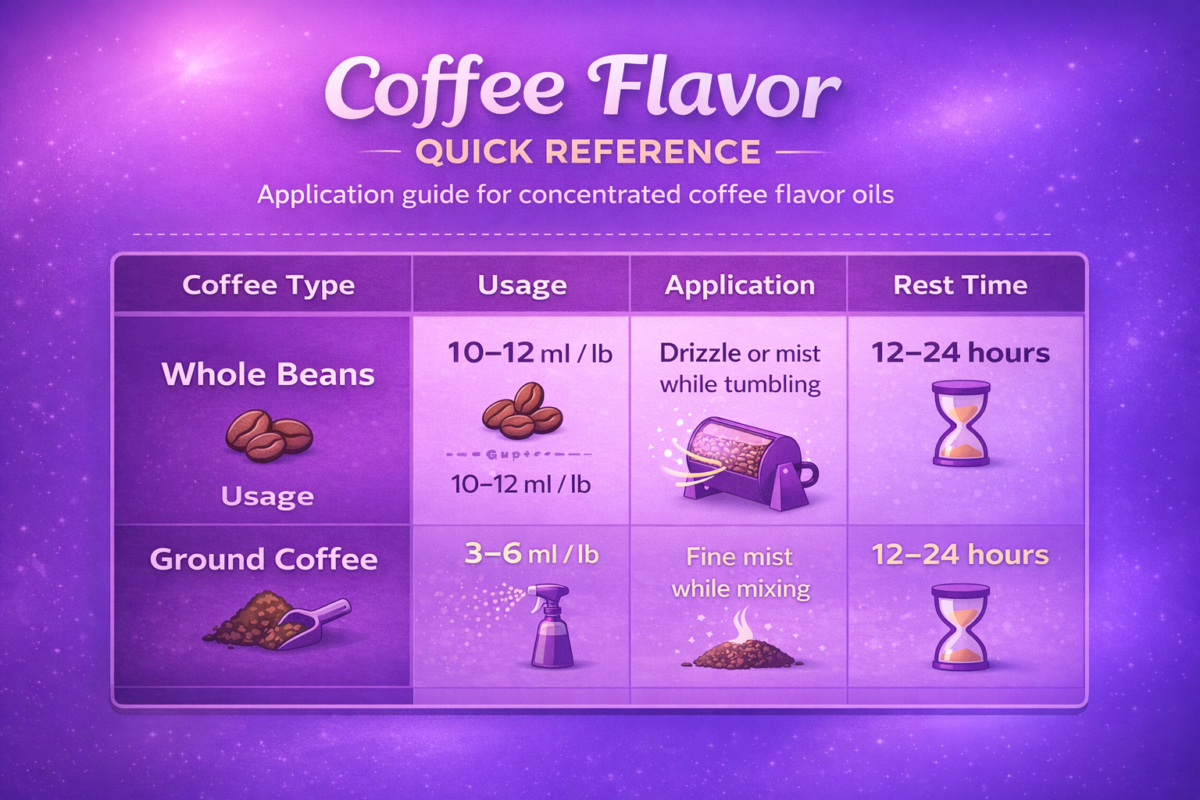
Coffee Bean Flavor Oils are highly concentrated flavor ingredients designed for use in roasted coffee applications.
This guide provides practical information on proper flavor usage, safety handling, storage recommendations, and application methods commonly used by coffee roasters when working with coffee bean flavor oils.
These guidelines are intended to help customers achieve consistent flavor performance while maintaining proper handling and storage practices.
Flavor Carrier Information
Most Coffee Bean Flavor Oils use propylene glycol (PG) as the carrier base for concentrated flavor compounds.
Flavor carriers are used in flavor manufacturing to dissolve and evenly distribute aroma ingredients so they can be applied consistently to food and beverage products.
In coffee flavoring applications, propylene glycol performs several important functions.
PG helps dissolve highly concentrated flavor ingredients and keeps them evenly dispersed within the formulation. This allows the flavor oil to apply smoothly across roasted coffee beans or grounds during the flavoring process.
Without a carrier, concentrated flavor compounds could apply unevenly and lead to inconsistent flavor distribution.
Functional benefits of propylene glycol in coffee flavor oils include:
- dissolving and stabilizing concentrated flavor compounds
- allowing flavor oils to spread evenly across roasted coffee beans
- supporting consistent flavor distribution during mixing
- helping protect delicate aroma compounds during storage
- contributing to longer shelf stability of the flavor formulation
The propylene glycol used in Coffee Flavor Oils is food-grade and commonly used throughout the food and beverage industry as a flavor carrier.
Coffee Flavor Application Guide
Coffee flavor oils are highly concentrated, so only small amounts are required to achieve balanced aroma and flavor.
The following guidelines reflect common practices used by coffee roasters and provide a starting point for flavoring roasted coffee.
Flavoring Whole Coffee Beans
Recommended Usage
10–12 ml per pound of whole beans
Flavor oils adhere best when beans are warm but not hot.
Ideal Bean Temperature
120–160°F (50–70°C)
- Too hot → flavor may burn off
- Too cool → oil may not absorb evenly
Application Method
- Place freshly roasted beans in a drum mixer, tumbler, or mixing bowl
- Lightly drizzle or mist flavor oil onto the beans
- Mix or tumble continuously for 2–5 minutes
The goal is an even coating without visible oil pooling.
Resting Time
Allow flavored beans to rest 12–24 hours before packaging so the flavor can fully absorb and stabilize.
Flavoring Ground Coffee
Ground coffee requires less flavor oil than whole beans.
Recommended Usage
3–6 ml per pound of coffee grounds
Begin with the lower end of the range and adjust as needed.
Application Method
- Spread grounds in a thin layer in a tray or mixer
- Apply flavor using a fine mist spray
- Mix immediately and thoroughly
Apply flavor in multiple light passes rather than one heavy application.
The goal is aromatic grounds without visibly wet coffee.
Resting Time
Seal flavored coffee and allow it to rest 12–24 hours before packaging to allow even flavor distribution.
Standard Flavoring Sequence
Coffee flavor should always be applied after roasting.
Typical production order:
Roast → Cool → (Optional Grind) → Flavor → Package
Roasting coffee after flavoring can destroy delicate aroma compounds.
Measuring Flavor Oils
Because flavor oils are highly concentrated, accurate measurement is important for consistent results.
Recommended tools include:
- graduated cylinders
- laboratory measuring cups
- precision syringes or pipettes
Accurate measurement helps ensure repeatable flavor profiles across production batches.
Batch Consistency
Many commercial roasters document their flavoring process to maintain consistent results.
Common production notes include:
- coffee origin
- roast level
- flavor oil quantity used
- mixing time
- resting time
Maintaining batch records helps replicate successful flavor profiles in future production.
Equipment and Mixing Considerations
For small batches, roasters often use large mixing bowls or tumblers.
Glass or stainless steel containers are commonly preferred because they:
- clean easily
- do not absorb flavor oils
- help prevent flavor carryover between batches
Equipment should always be cleaned thoroughly between flavors.
Handling and Safety
Coffee flavor oils are concentrated flavor ingredients and should be handled with appropriate care.
Recommended safety precautions include:
- wearing protective gloves
- wearing safety goggles or protective eyewear
- avoiding direct contact with skin and eyes
- working in a clean, well-ventilated area
Containers should always be stored securely.
Keep flavor oils in a safe location where they are not accessible to the public, children, or pets.
Storage Guidelines
To maintain product stability and flavor quality, store flavor oils under proper conditions.
Recommended storage practices:
- store in a cool, dry environment
- keep containers tightly sealed when not in use
- avoid direct sunlight and heat exposure
Ideal storage temperature:
60–70°F (15–21°C)
Proper storage helps preserve aroma integrity and protect delicate flavor compounds from oxidation.
Shelf Life
Coffee Bean Flavor Oils formulated with propylene glycol are designed for long-term stability when stored properly.
For best flavor strength and product performance, we recommend using flavor oils within one year of purchase.
When stored under recommended conditions, flavor oils may remain usable for up to 24 months, although aroma strength may gradually decrease over time.
Products used beyond the recommended shelf life may experience reduced flavor intensity or changes in performance.
Coffee Flavor Oils cannot guarantee product quality or performance when products are used after the suggested shelf life period.
Testing Recommendations
Coffee beans, roast levels, and brewing methods can influence how flavor performs in finished coffee.
We recommend conducting small batch testing before full-scale production to determine the ideal flavor level for your specific coffee.
Begin with the lowest recommended usage rate and adjust gradually to achieve the desired flavor intensity.
Intended Use
Coffee Bean Flavor Oils are highly concentrated flavor ingredients intended for use in finished food or beverage products.
Flavor oils should not be consumed directly or used undiluted.
Flavor Lab Standards
Coffee Flavor Oils are produced using food-grade ingredients and quality-controlled formulation processes.
Our goal is to provide flavor oils that deliver consistent aroma strength, stability, and reliable performance in coffee applications.
Important Usage Notice
The information provided in this guide reflects common industry practices and is intended for general educational purposes.
Results may vary depending on roast profile, coffee origin, equipment, and application technique.
Customers are responsible for evaluating ingredient suitability and regulatory compliance for their intended use.
Coffee Flavor Oils assumes no liability for product misuse, improper application, or use beyond recommended guidelines.
A Friendly Note From Our Lab
These guidelines are intended as helpful starting points rather than strict rules.
Every roaster, bean origin, and roast profile behaves a little differently, and experimentation is part of the craft.
After all…
We’re flavor specialists — not coffee roasters.
Think of this guide like the recipe suggestion on the back of the box — the real magic happens when you make it your own.